Calgary's Parging Specialists
PARGING REPAIR & RESTORATION CALGARY
Crumbling foundations. Cracks. Spalling concrete. Restored with mesh-lath reinforcement and polymer-modified cement — built to last Calgary winters.
See Our Work ↓Crumbling foundations. Cracks. Spalling concrete. Restored with mesh-lath reinforcement and polymer-modified cement — built to last Calgary winters.
See Our Work ↓Calgary parging fails for predictable reasons — the freeze-thaw cycle, poor surface prep, or the wrong cement mix. Knowing which one is happening on your foundation is the first step to a fix that actually lasts.
Snow piles against the wall and the parging absorbs moisture. As temperatures swing overnight, water freezes and expands inside the cement, popping the face right off the foundation.
See What Goes Wrong → 02Parging applied over dusty, unprepared concrete has nothing to hold onto. It falls off in sheets within a couple winters. The fix is a mechanical bond — mesh-lath fastened into the concrete first.
Learn About Mesh-Lath → 03Standard sand-cement parging is brittle. When the foundation shifts even slightly with seasonal frost, rigid cement cracks. Polymer-modified mixes flex — that's why we don't use the cheaper standard mix.
See Why Polymer Matters →Spot repairs to crumbling, cracked, or spalling parging on residential foundations. We hammer-chip back to solid concrete, prep properly, and rebuild with mesh-lath where needed.
When more than ~20% of the parging is failing, full resurface is the better long-term call. We strip back to bare concrete, mesh-lath the wall, and apply a multi-coat polymer-modified system.
Hairline cracks, structural cracks, and spalled corners. We open the crack, address whatever's causing the movement, and rebuild with proper bonding agent and flexible polymer mix.
Galvanized mesh fastened mechanically to the concrete substrate. Gives the new parging a physical grip — not just a chemical bond — so it doesn't peel off the wall in two winters.
Concrete retaining walls, garden walls, and any vertical concrete surface that needs a cosmetic coat or weather protection. Same polymer-modified system as foundation parging. For decorative stone facing over the same walls, see our stone masonry page.
Parging on new-build foundations before backfill or finished landscaping. We work with general contractors and homeowners on builder-grade and custom homes across Calgary.
Smooth Float, California Knockdown, or Rock Dash — we match the texture and grey tone of your existing parging so a spot repair blends instead of standing out as an obvious patch.
Crumbling parging is one of the most common Calgary home-inspection callouts. Fresh parging removes negotiation leverage and improves curb appeal — one of the highest-ROI fixes before listing.
Drag the slider to see what proper parging restoration actually looks like.
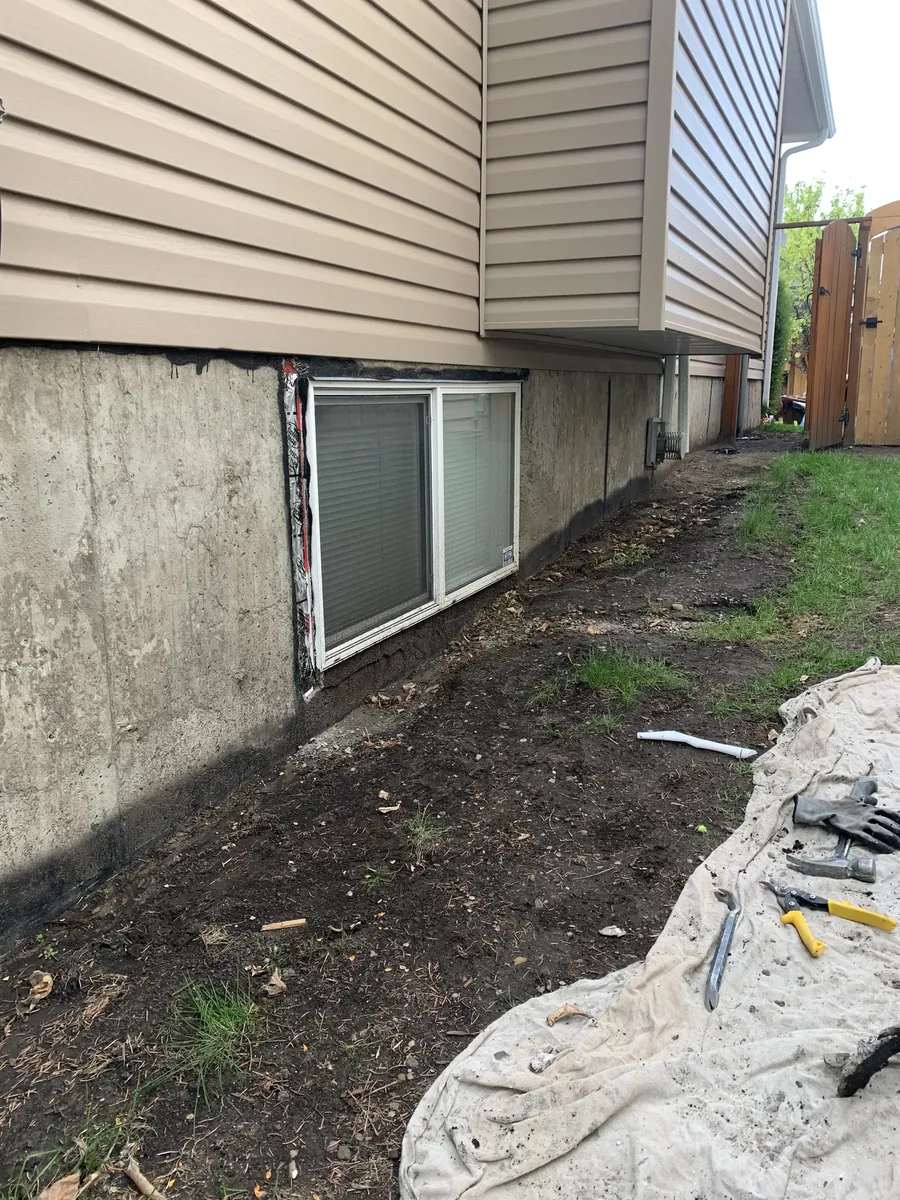
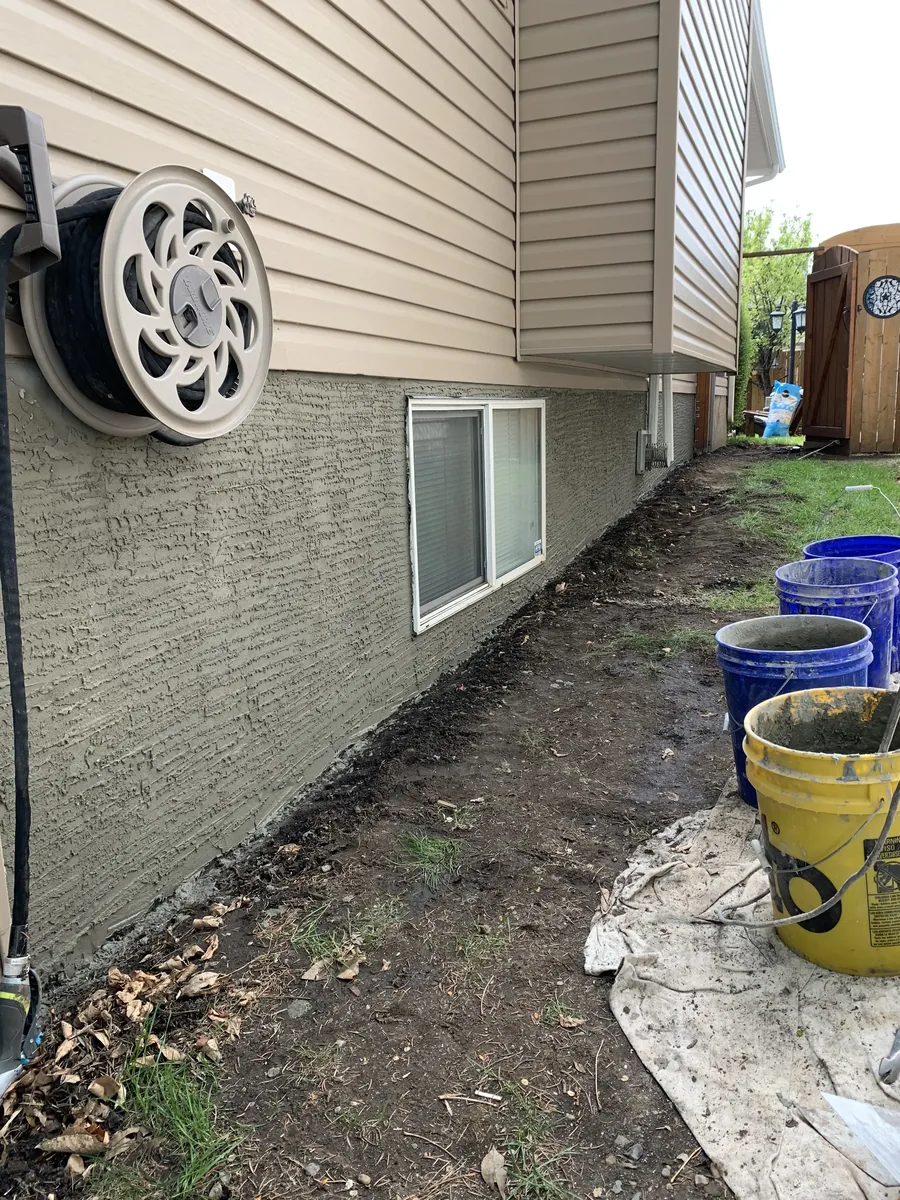
Stripped back to bare concrete, mesh-lath fastened, multi-coat polymer-modified parging applied. Calgary, AB.
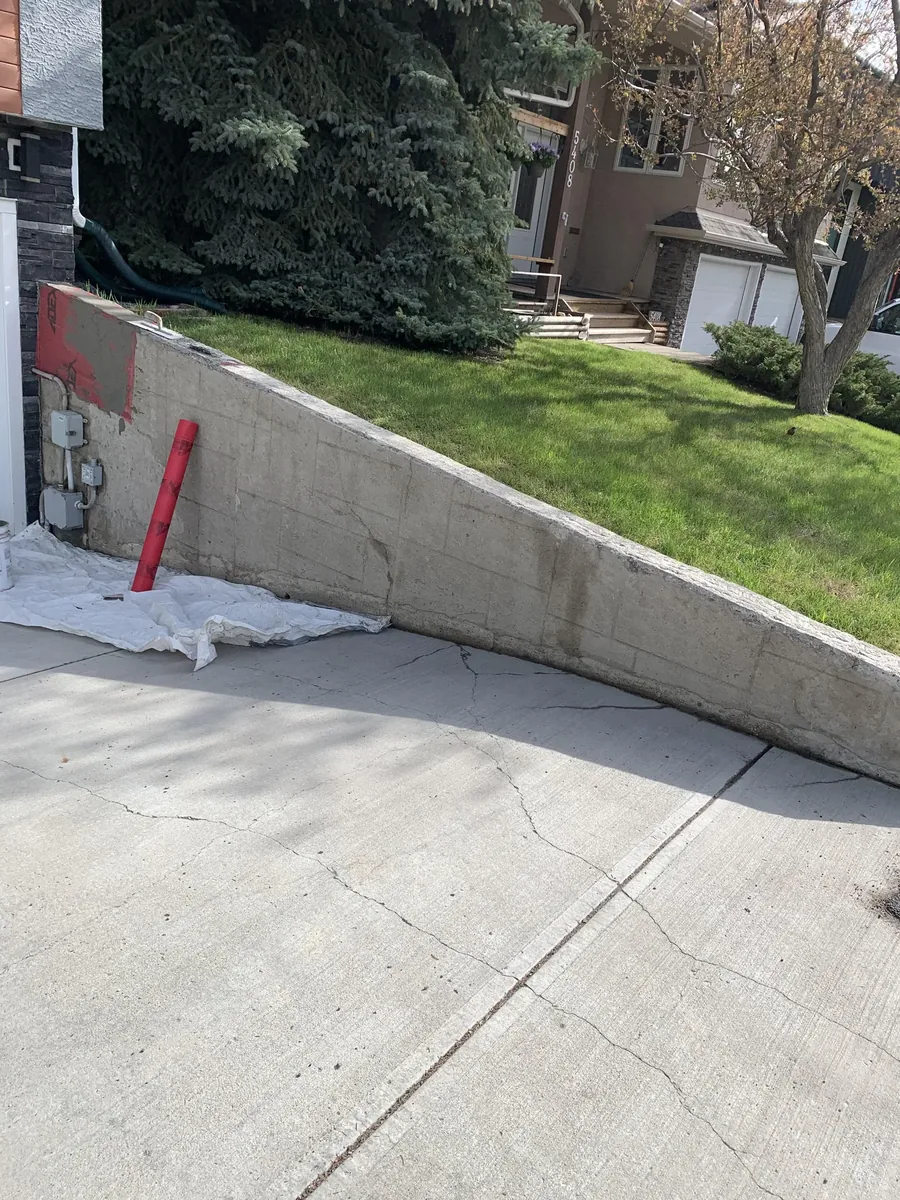
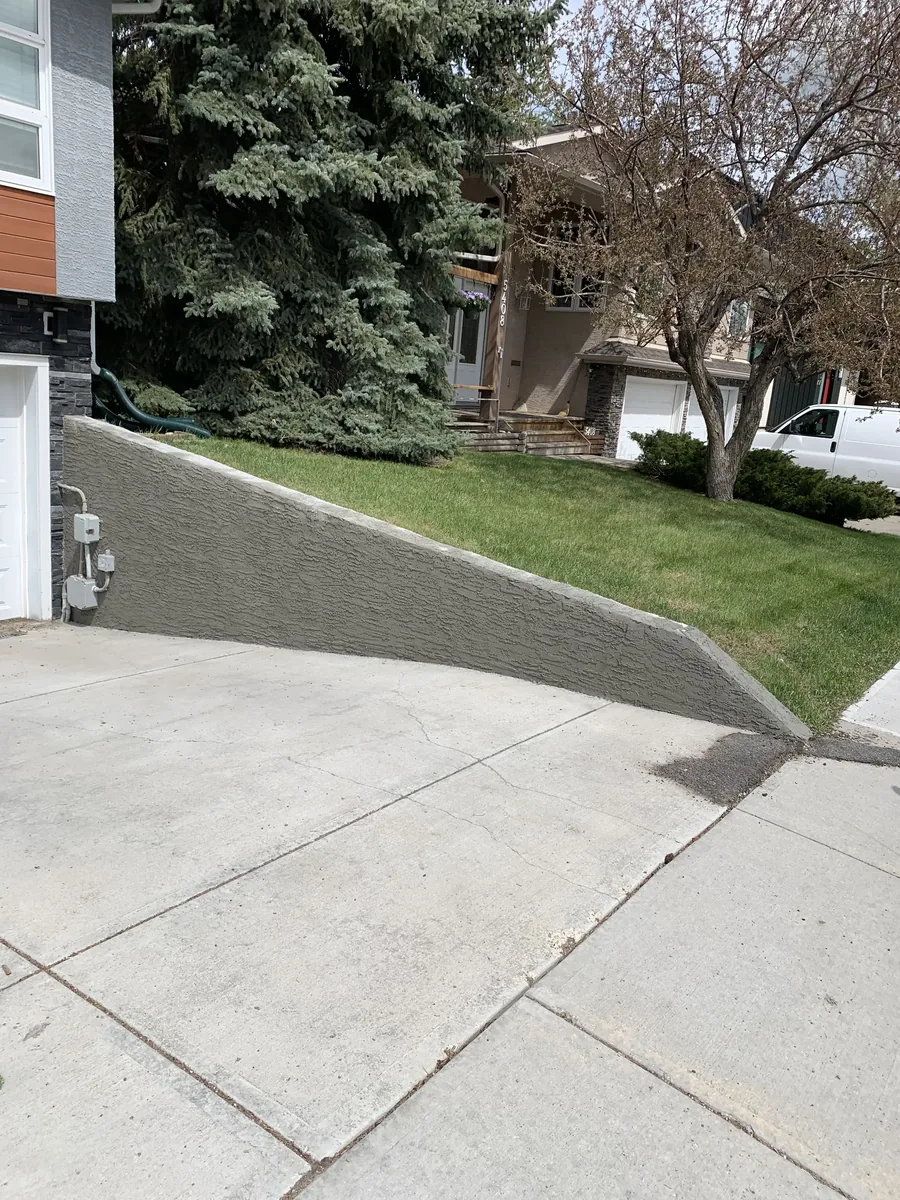
Rebuilt structural corners using bonding agents and formwork for sharp lines, then re-parged with matching texture.
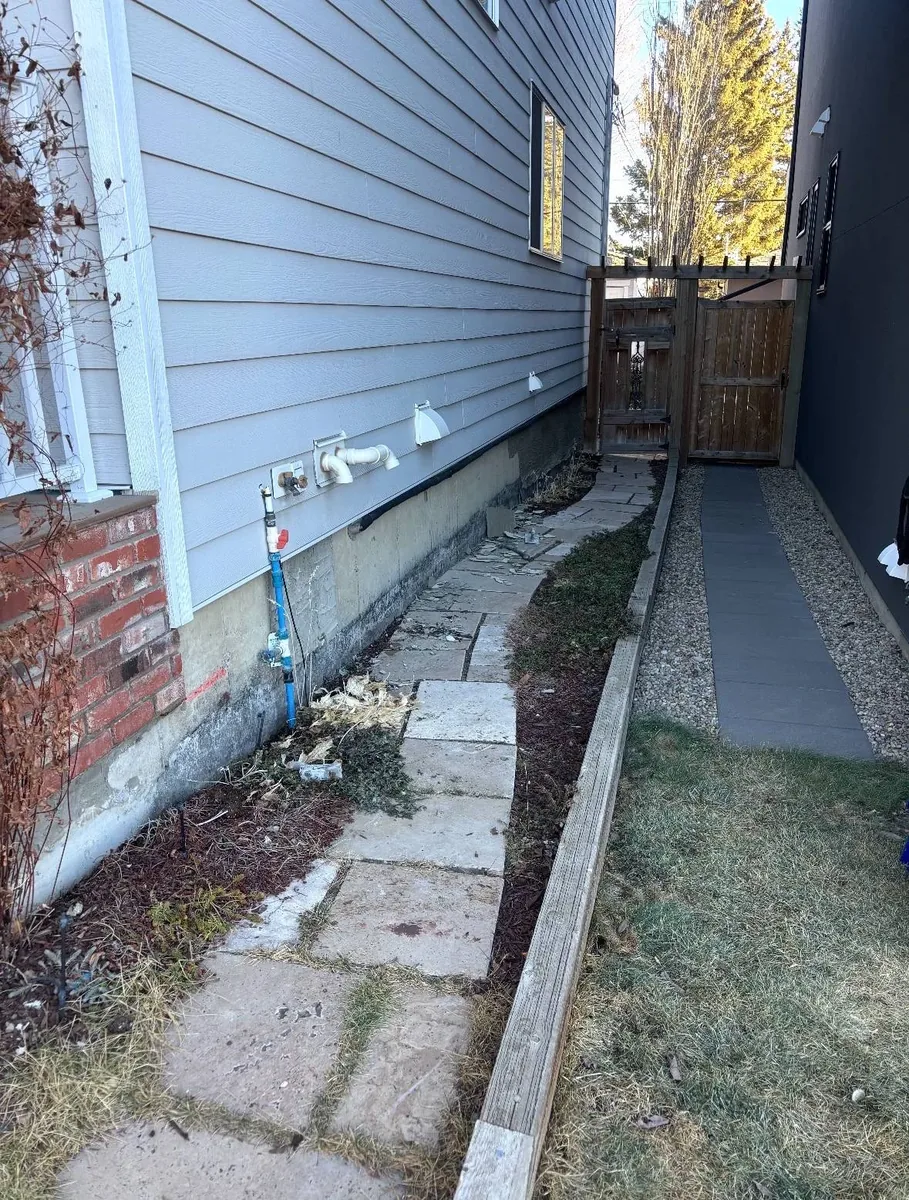
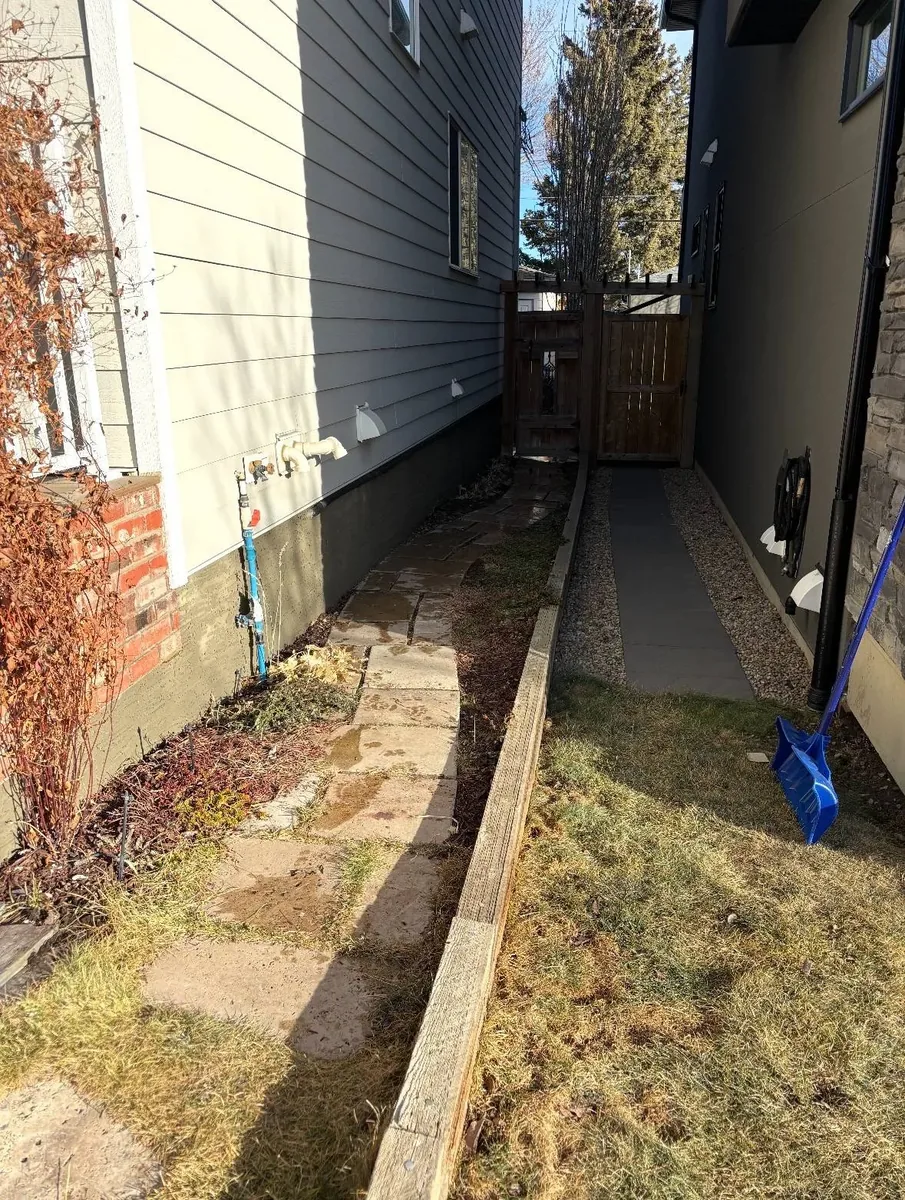
Bare weathered foundation prepped, primed, and re-clad with fresh polymer-modified parging along the side-yard strip. Calgary, AB.
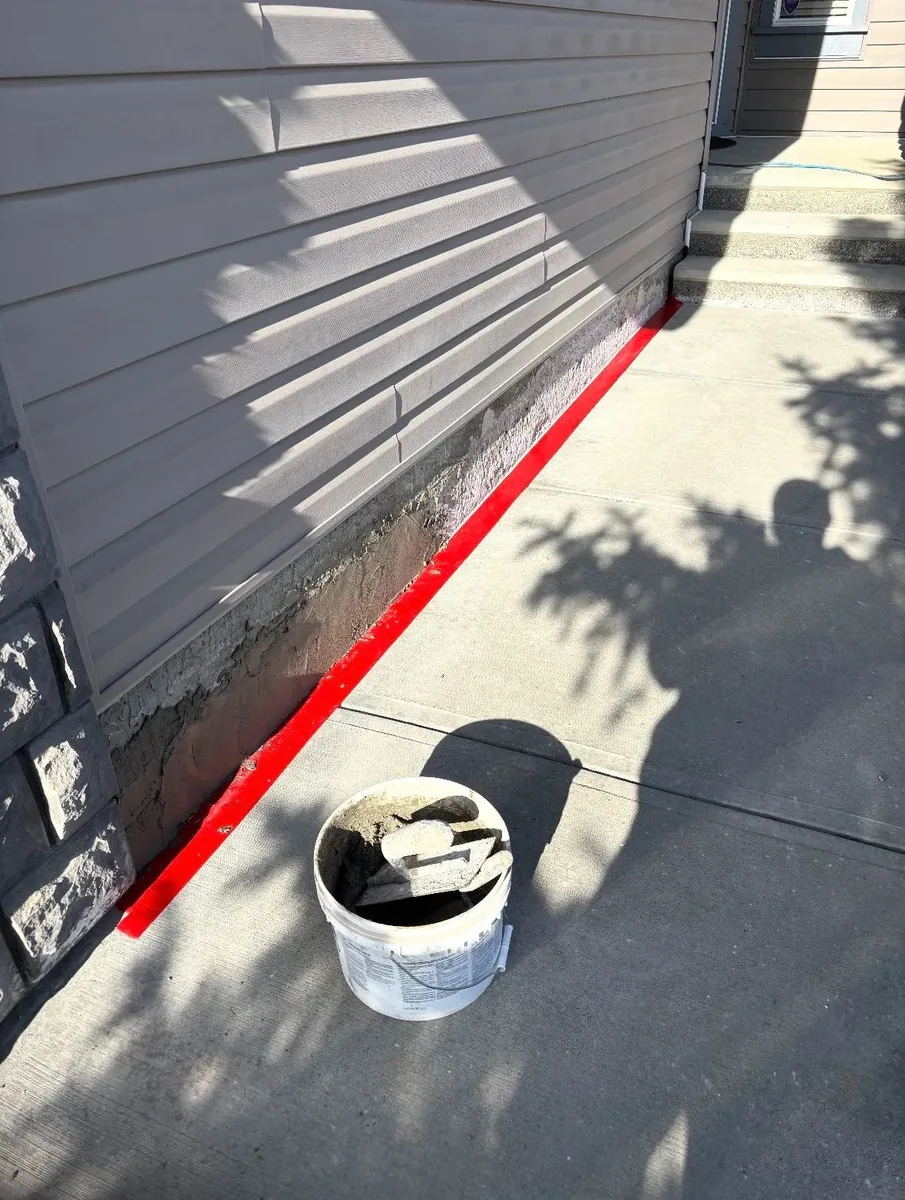
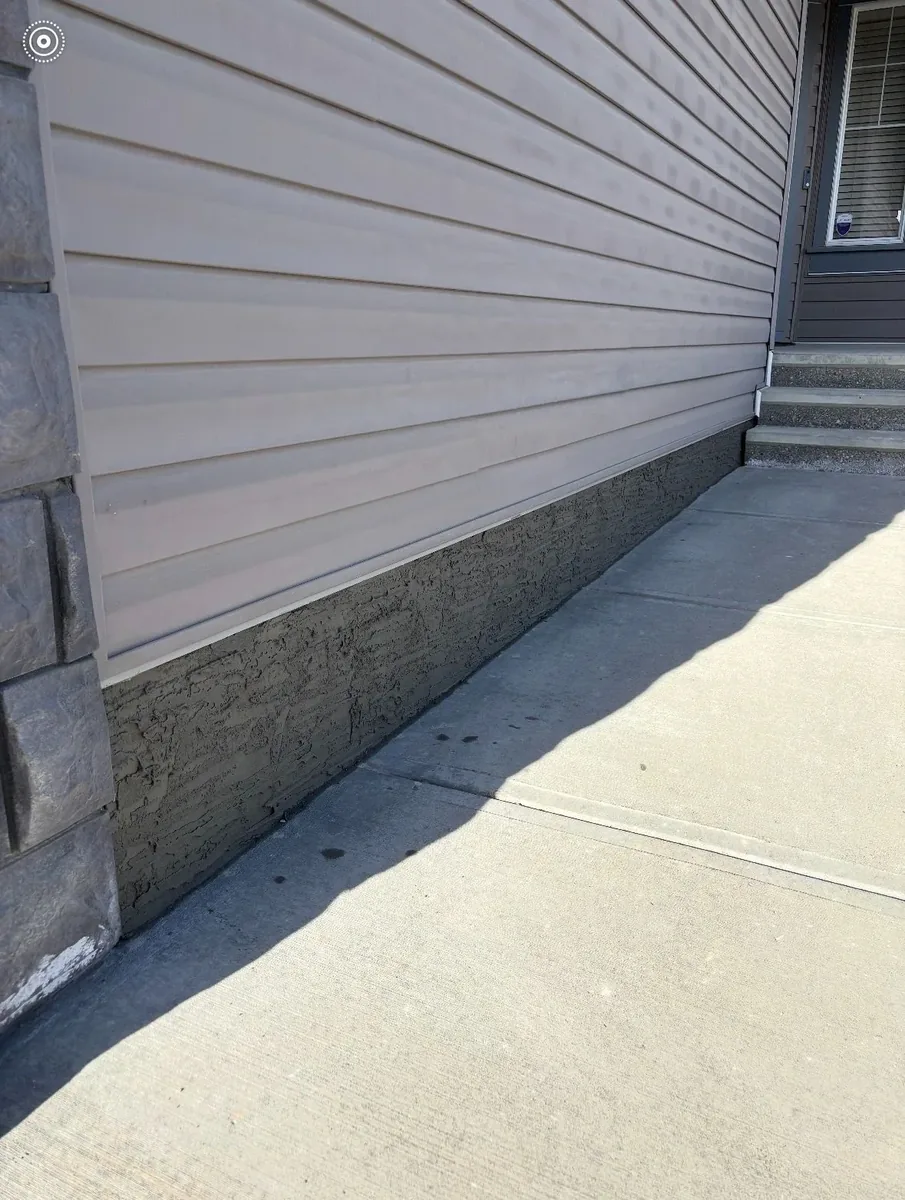
Failing parging chipped back to bare concrete, masked for a clean edge, and re-clad with a fresh polymer-modified coat. Calgary, AB.
Most parging that fails in Calgary fails because it was smeared on top of dusty, unprepared concrete with no mechanical anchoring. The new cement has nothing to hold onto. One winter of freeze-thaw and it sheets right off.
We use a mechanical bond system. Galvanized mesh-lath fastened directly into the concrete with masonry pins, then cement applied through and around the mesh. The new parging physically grips the wall — it can't just peel away.
Standard sand-and-cement parging is rigid. When your foundation shifts even fractionally with frost movement — and every Calgary foundation does — rigid cement has no give. Hairline cracks open up the first winter. Water gets behind. The cycle starts.
Polymer-modified parging is fortified with acrylic additives that act like a built-in glue. Stronger bond to the wall, and the cured cement keeps a small amount of flexibility so it can absorb seasonal movement instead of cracking through it.
Two decades of foundation work has shown us the same handful of patterns over and over. If you're noticing any of these, the underlying problem is rarely the parging itself — it's how it was installed or what's happening around it.
Snow piled against the foundation all winter saturates the bottom of the parging. Repeated freeze-thaw at the grade line causes spalling. Keep snow at least a foot off the wall.
Parging applied over dust, paint, or old failing parging has no bond. We pressure-wash, hammer-chip, and prime with bonding agent before any cement goes on the wall.
Cheap mixes with no polymer modification crack with the first frost movement. We don't quote standard sand-cement parging — it never lasts in Calgary's climate.
If the ground slopes toward the house, every rain drains down behind the parging. The cement skin looks fine while the wall behind it stays wet. Re-grading often has to come before any parging fix.
Homeowner patches over visible damage often seal moisture in rather than fixing the source. The original problem grows behind the patch and surfaces somewhere new the next year.
White powdery deposits on the parging mean water is moving through the cement and depositing minerals on the surface. The parging is doing its job, but there's a moisture source to find.
Most parging in Calgary fails within 2–5 years. Not because parging is fragile, but because contractors use the cheapest sand-cement mix on the cheapest prep. Cement cracks, no bond, water gets behind, the cycle starts.
We use polymer-modified parging for every foundation we touch. The polymer acts as a built-in adhesive and gives the cured cement the small amount of flexibility it needs to handle Calgary's 30+ °C daily summer-to-winter swings without cracking.
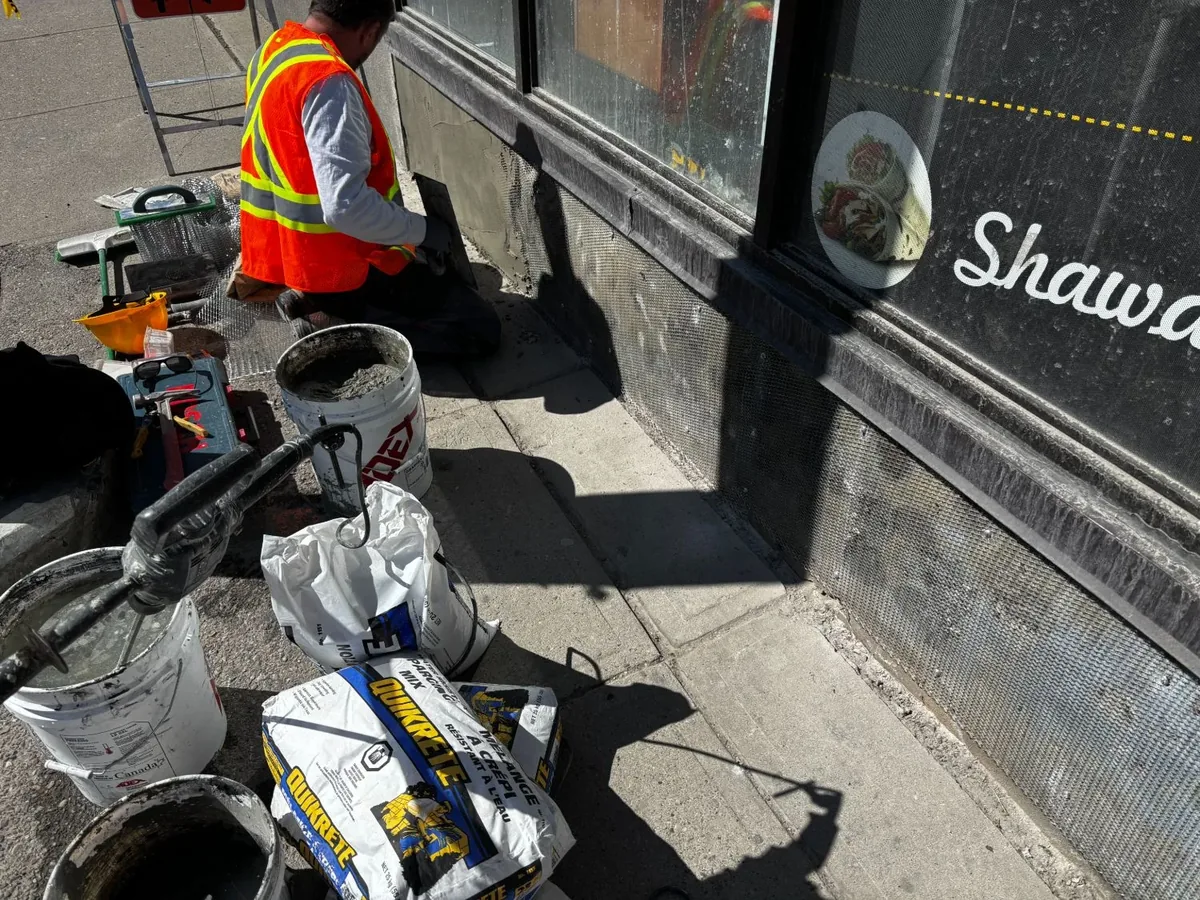
Polymer-modified mix being applied to a Calgary storefront — mesh-lath visible on the wall, fresh mortar in the bucket.
We match the existing architectural style of your home — or recommend the right finish for a new build.
Clean, sandy finish created with a sponge float. The modern standard for new builds and contemporary home exteriors. Minimalist, no shadow lines.
Also called Trowel Finish — a textured, stucco-like appearance. Forgiving of minor surface variations and the most common Calgary-area parging finish.
Traditional aggregate finish with small stones embedded in the cement. Common on older Calgary homes — we still use it for character matching on heritage properties.
Parging shouldn't be a mystery. Here's exactly what happens when you hire us.
We come to your home, inspect the foundation, and identify why the parging is failing — not just the visible damage. Free, 30–60 minutes.
Itemized scope of work. Repair vs full resurface, materials, texture, timeline, total cost. No verbal estimates, no surprises later.
Hammer-chip back to solid concrete. Pressure-wash the surface clean. Apply bonding-agent primer. No skipping this step — bond is everything.
Mesh-lath fastened where needed. Polymer-modified cement applied in multiple coats with proper cure time between. Texture finish to match.
You inspect the finished work with us. If anything isn't right, we make it right. Then the 5-year workmanship warranty kicks in.
ICF foam above grade cannot stay bare — UV breaks it down and code requires a protective coat. That coat is parging: mesh embedded in polymer-modified cement, and it is the one scope every ICF build in Calgary must buy. We schedule it to your pour calendar, quote it per lot, and keep it consistent house to house. Building the whole envelope? One sub covers stucco, stone and parging in a single mobilization.
Production parging on a Calgary multi-unit — clean lines, done at pace.
On most Calgary homes the stucco wall ends where the parged foundation begins — and the two fail together. Cracks travel across the transition line and water tracks behind both materials. We repair stucco and parging as one system, matched in colour and texture where they meet, so the fix disappears. See our stucco repair work →
We parge foundations across all four quadrants of Calgary plus surrounding communities. Same-day quotes for most addresses within 60 km of the city.
Practical answers to the questions Calgary homeowners ask before hiring a parging contractor.
Parging cost depends on the size of the area, the extent of the damage, and the texture finish. Small spot repairs typically fall in the lower hundreds. Mid-size resurfaces (one or two walls) are usually in the low thousands. Full foundation resurface on an average home is mid-thousands. We give you a free, written, itemized quote — no surprises.
Parging is the cement coating on the exposed portion of your foundation wall — the strip of concrete visible between your siding or stucco and the ground. It protects the foundation from water infiltration, hides raw concrete, and gives the house a finished look. In Calgary it takes a beating from freeze-thaw, road salt, and snow contact.
We generally recommend repair if the damage is limited to spot areas — usually 20% of the surface or less. Anything more extensive, full resurface is the better long-term call. Every foundation is different though — the only honest way to know is to have us come look. Free assessment.
Three common causes in Calgary: (1) the previous contractor applied parging over dusty, unprepared concrete — no bond; (2) standard sand-cement mix was used instead of polymer-modified parging, so it cracks with thermal movement; (3) water is entering behind the parging from a grading issue. We diagnose the root cause before quoting — no band-aid fixes.
Properly installed parging with polymer-modified cement and mesh-lath reinforcement should last 15–25 years in Calgary. Poorly installed parging — over dusty concrete, standard sand mix — often fails in 2–5 years. Our parging carries a 5-year workmanship warranty.
Not reliably for full repairs. Parging cement needs temperatures above 5°C for at least 48 hours to cure properly. Calgary parging season runs roughly April through October. Emergency spot patches can be done year-round with cold-weather rated products if you have an active water issue.
Crumbling or missing parging is one of the most common Calgary home-inspection callouts. Buyers often assume foundation problems even when there are none. Fresh parging dramatically improves curb appeal and removes negotiation leverage. It's one of the highest-ROI cosmetic exterior fixes before listing.
Parging is a thin cement coating on foundation concrete — typically the strip between siding and grade. Stucco is the wall finish on the rest of the exterior, usually applied over wire lath or EIFS foam. Both are cement-based but use different mixes and serve different purposes. We do both — and we make sure the transition between parging and stucco at the top of the foundation is properly sealed.
Yes — we match texture (Smooth Float, California, or Rock Dash) and grey tone for spot repairs. On older sun-faded parging a perfect colour match isn't always possible. When that's the case we'll tell you upfront and recommend either a wider re-coat for uniformity or accept a slightly visible patch.
Three main Calgary styles: Smooth Float (clean modern sponge finish — new builds), California / Knockdown (textured trowel finish — most common Calgary parging), and Rock Dash (embedded aggregate — traditional older homes). We match your existing finish or recommend the best option for new installs.
Yes. We parge concrete retaining walls, garden walls, garage foundations, and any vertical concrete surface that needs a cosmetic coat or weather protection. Same polymer-modified mix and mesh-lath system as foundation parging.
Our 5-year workmanship warranty is in writing on every quote and invoice. It covers cracking, delamination, and bond failure attributable to our installation. We're a registered Alberta business, fully insured, and WCB registered. We've been working in Calgary for over two decades.