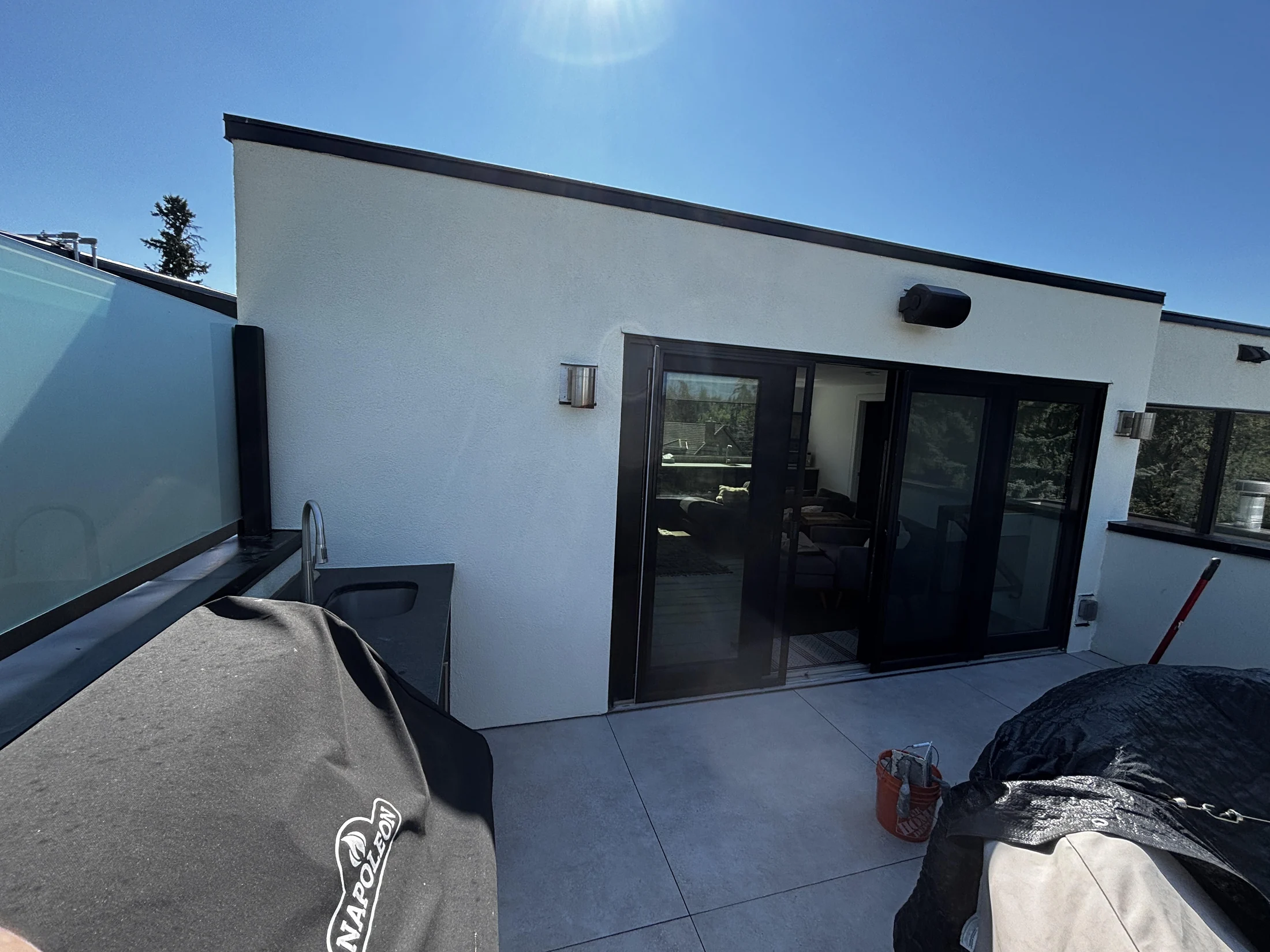
Paint is the last step. Prep is the job.
Anyone can spray a wall. Making paint stay on Calgary stucco through chinooks, hail and minus-thirty takes washing, crack repair, priming, and a breathable coating built for cement, not a hardware-store exterior paint that peels in two summers.
Most faded or tired stucco needs a proper paint job and nothing more. Two situations need something else first, and we tell you which one you have after seeing the wall.
The stucco is sound, the colour is tired. Power washed, primed, then two coats of a breathable acrylic coating built for cement. The most cost-effective refresh a stucco home can get.
Cracks through the base coat, impact damage, hollow spots or failing patches need fixing before anything cosmetic. Paint over damage just puts a date on the callback. Stucco repair →
When fine cracking runs across whole walls, paint will not hold. That wall needs a fibre-mesh base coat and a new acrylic finish, which is a re-coat rather than a paint job. What that means ↓
Windows, doors, lights and everything you do not want painted are masked and papered before the first drop goes on. We coat with breathable acrylic systems made for cementitious walls: they shed rain, survive freeze-thaw, and let the wall exhale water vapour instead of trapping it behind a plastic film.
Not every paint belongs on stucco. These are the coatings we use on Calgary walls, what each one is for, and the ones we will not put on a cement wall.
Our default on sound cement stucco. Water-based, UV-stable so the colour holds through Calgary summers, and vapour-permeable so moisture in the wall dries out through the coating instead of pushing it off. Flat or low sheen so the texture reads evenly. Two finish coats over a masonry primer.
A thick, rubbery acrylic that stretches and bridges hairline cracks up to about 1.5 mm. Good on older cement stucco with fine crazing and on walls that take driving rain. It breathes less than standard acrylic, so it only goes on a dry, sound wall with the cracks sealed first, never over a wall with moisture behind it.
A potassium silicate paint that bonds chemically with the cement instead of sitting on top as a film. Highly breathable, matte, very long-lived, and it cannot peel. The colour range is narrower and it needs bare or previously silicate-painted stucco, so we use it on select heritage and lime-cement jobs.
EIFS and acrylic stucco are not painted with house paint. They get a new tinted acrylic finish coat from the system manufacturer (ADEX, Dryvit, Sto, Parex), which restores colour and texture together and keeps the system warranty intact.
A bonding primer or chalk-binding conditioner goes on first. It locks down a chalky old finish, evens out absorption so the colour does not go blotchy, and gives the finish coats something to grip. Skipping it is the second most common reason painted stucco fails.
Standard exterior latex, oil or alkyd paint, and film-forming sealers. They trap water vapour in the cement, which pushes the paint off from behind and can spall the stucco face. The cheapest way to ruin a stucco wall is a good-looking coat of the wrong paint.
If a wall is cracking everywhere, paint alone will not hold no matter how good the prep. The fix is a base coat with fibre mesh embedded across the whole wall and a colour-matched acrylic finish on top: a new surface, not a new colour. It costs more than paint and it belongs on the repair side of our work.
We colour match your existing finish, or give you options and physical samples so you can decide on the wall, in your own light. With every paint job we also use colour visualization software to show you how different colours would look on your house before a bucket is opened. Commercial elevations too: commercial services →
A few of the shades Calgary homeowners choose most. Every paint job includes a colour visualization of your own house in the colours you are considering, before a bucket is opened.
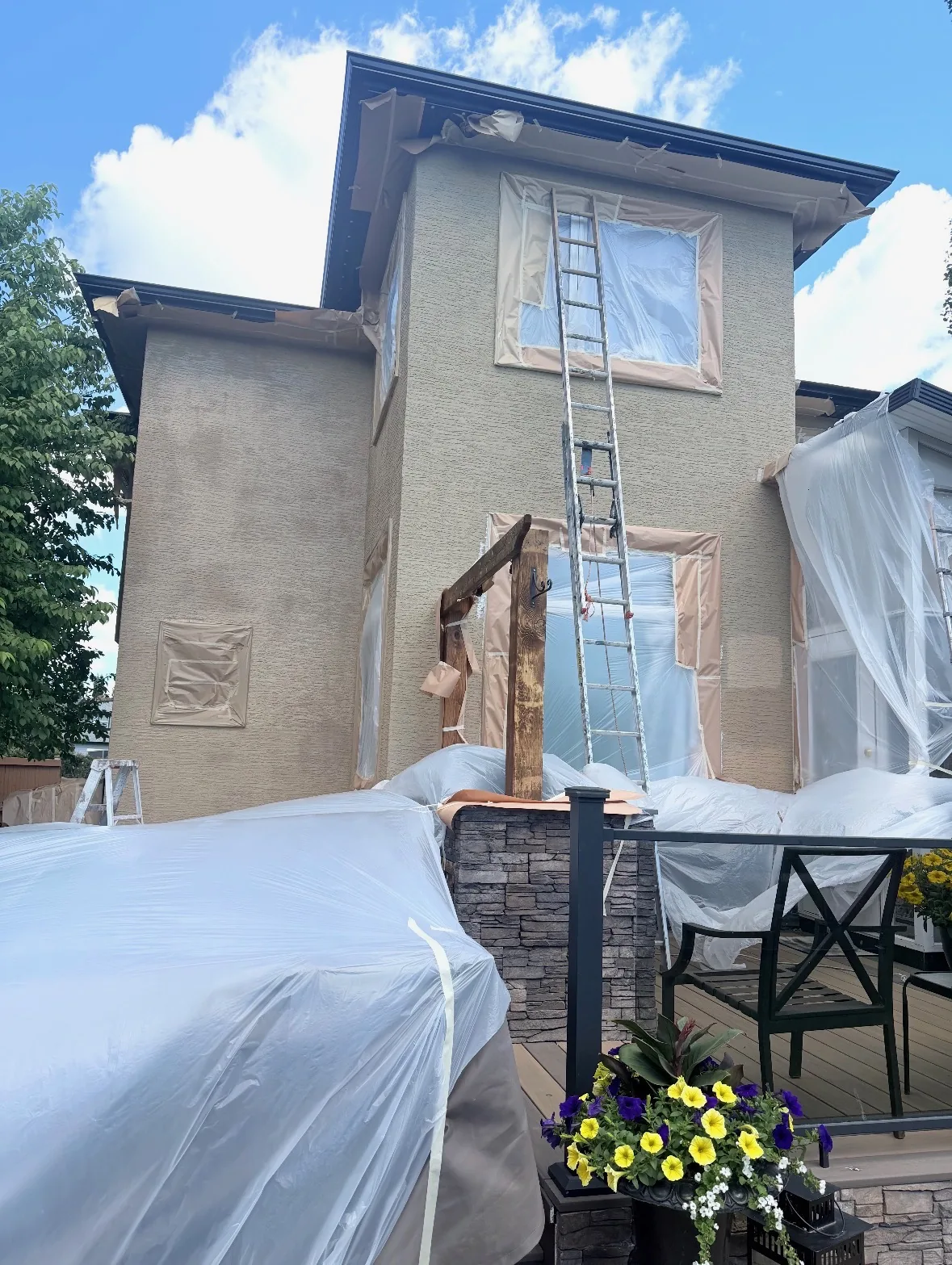
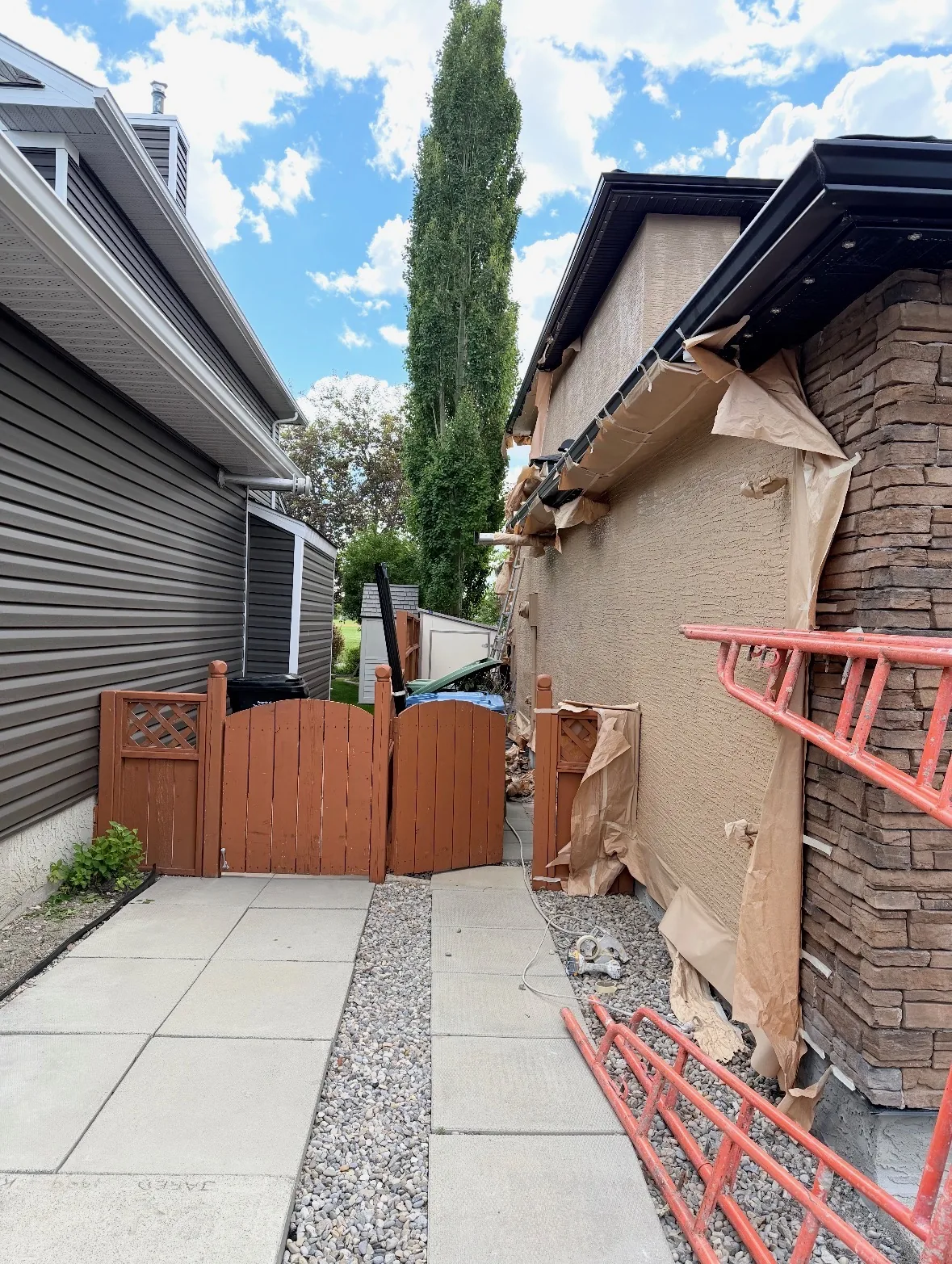
Two storeys, every window and door papered, the deck and stone covered, before a single coat goes on. On most houses the masking takes as long as the painting, and it is why the finish lines are crisp and nothing gets overspray.
What we cover and protect:
Before we arrive: move vehicles off the driveway, pull patio furniture and planters a few feet from the walls, close the windows, and turn off sprinklers for the day. We handle the rest, and the paper comes down the same day the last coat goes on.
Cracks, water damage and leaks, EIFS repair, woodpecker holes and full re-stucco all live on our main stucco page, with before-and-after work from across Calgary.
What Calgary homeowners ask first.
With proper prep and a breathable acrylic coating, expect 10 to 15 years of solid performance. With regular exterior paint over unwashed, uncracked-repaired stucco, peeling commonly starts within 2 to 5. The difference is almost entirely in the prep and the product.
No, and anyone who says yes is selling you a callback. Paint bridges a hairline crack for a season, then the crack telegraphs straight through. We repair cracks properly first, then coat, so the finish stays sealed.
Stucco is cement, and cement needs to breathe. Standard exterior paint forms a vapour-tight film that traps moisture in the wall, which pushes the paint off from behind and can spall the stucco face. Breathable acrylic coatings let vapour out while keeping bulk water off the wall.
Painting fits when the stucco is sound but faded, stained, or the wrong colour. If the finish is failing, cracked everywhere, or damaged, a repair or an acrylic recoat is more honest, and we'll tell you which after seeing the wall.
Yes. We can match the colour you have, or bring options and samples so you can see them on your own wall. With every paint job we also run your house through colour visualization software, so you see how a few different colours look on your actual home before you commit.
Late spring through early fall, when overnight temperatures stay above the coating's cure threshold. The calendar fills in exactly that order, so if you want it done this season, quote early.
Three, depending on how bad it is. Hairline cracks in an otherwise sound wall are sealed and then painted over as part of the prep. Widespread cracking across a wall gets a base coat with fibre mesh embedded in it and an acrylic finish on top, which ties the surface together and gives you a fresh colour and texture. Cracks that go through the base coat, bulging or hollow spots, and anything with water behind it need a stucco repair first. We look at the wall and tell you which one you have before quoting.
Almost always because the wall was painted with regular exterior paint, over dirt or chalk, or over cracks that were never repaired. Cement stucco needs to breathe; a non-breathable paint traps moisture, which pushes the film off from behind, usually on the sunniest wall first. The fix is to strip the loose paint, wash, repair, prime and recoat with a breathable acrylic made for masonry.
Yes. EIFS and acrylic stucco take an acrylic coating well, as long as the sealant joints are sound and any impact damage is repaired first. We use the coating the finish manufacturer recommends so the warranty holds. If you are not sure which system you have, tap the wall: EIFS sounds hollow, cement stucco sounds solid. More on the two systems on our stucco page.
It depends on the size of the house, how many storeys and how much access equipment is needed, the condition of the wall (crack repair and priming are part of the job), whether it is a straight paint or a fibre-mesh recoat, and how much masking the house needs. We look at it in person or from your photos and give you a written quote, so you can see exactly what you are paying for.
A breathable 100% acrylic masonry coating, applied as a primer plus two finish coats. It sheds rain and survives freeze-thaw while letting water vapour out of the wall. Where a wall has fine hairline cracking we use an elastomeric acrylic that bridges hairlines, and on EIFS we use the manufacturer's tinted acrylic finish coat. We do not use hardware-store exterior house paint on stucco. See the types of stucco paint ↑
Acrylic masonry paint is the better all-round choice on sound cement stucco: it breathes more, holds colour in Calgary sun, and costs less. Elastomeric earns its place on older walls with fine hairline crazing, because it stretches over those cracks. It breathes less, so we only use it on a dry wall with the cracks sealed and no sign of moisture behind the stucco.
Flat or low sheen. Stucco is textured, and any gloss catches light on every high point, trowel mark and old patch. A flat acrylic hides the history of the wall and is what the coating manufacturers specify for masonry.
Power wash to a clean, sound surface. Repair cracks, holes and failed patches. Mask every window, door, light, vent and anything that stays its own colour. Prime with a masonry primer. Then two coats of the finish. Prep is most of the job, which is why the coating lasts.
Free quote, usually back to you within one business day. Spring and summer slots book first, get in early.